10% off your first order!
Divided Plates
Loading...
Subcategories
Brands
Price Ranges
-
Listing

Order and Practicality at Tables with Sectioned Plate Models

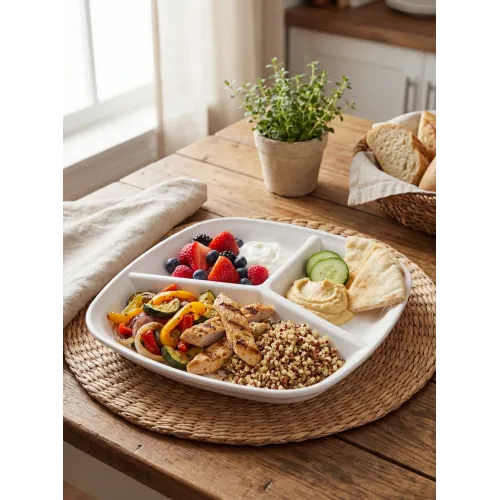
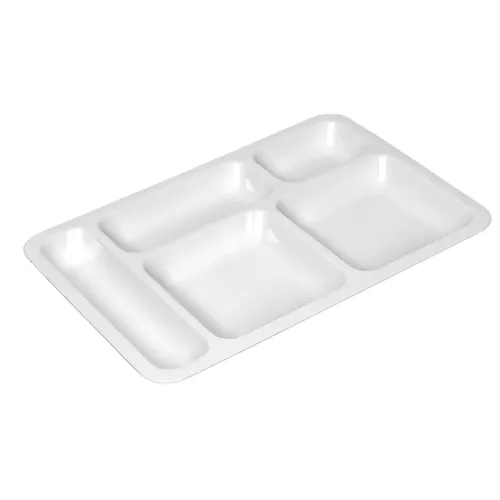
Sectioned plates enhance serving speed and hygiene both at home and in professional kitchens by presenting food in a neatly organized manner in separate compartments. Particularly, breakfast plates and cafeteria sectioned plates stand out in terms of portion control and presentation order. The unbreakable polycarbonate material is preferred in restaurants, hotels, cafeterias, schools, military, and catering operations due to its impact resistance, lightness, and long lifespan.

Polycarbonate sectioned plates minimize the risk of breakage compared to glass/porcelain counterparts, reduce losses in service tempo, and lower the total cost of ownership. Stackable designs save storage space and accelerate transportation and preparation processes.

Elegance and Functionality in Breakfast Plates

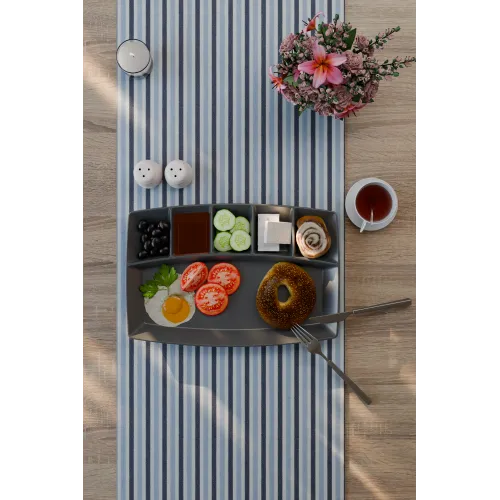
Arranging cheese, olives, jam, and accompaniments on one plate at breakfast tables improves both aesthetics and workflow. Polycarbonate breakfast plates:

  • Enhance service speed with their unbreakable and lightweight structure.
  • Dishwasher safe, maintaining hygiene standards.
  • Boost presentation with glass/porcelain appearance options and modern colors.

In children’s menus, small-sized plates are preferred, whereas extensive surface breakfast plates are chosen for open buffets. The compartments prevent sauces, jams, and hot-cold accompaniments from mixing.

Convenience in Mass Meals with Cafeteria Sectioned Plates

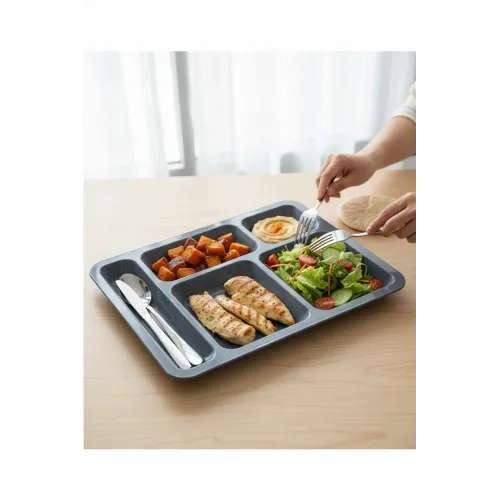
In high-circulation cafeterias and production kitchens, cafeteria models carry main courses, rice/pasta, salad/appetizers in separate compartments. Thus:

  • The standard of hygiene and portion is maintained.
  • Tray-top flow order accelerates, reducing queues.
  • The stackable form facilitates storage and transportation.

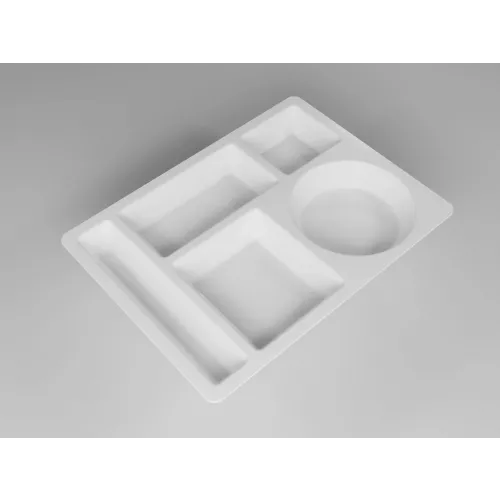
There are options available according to operational needs with 3, 4, or 5 compartments. The depth and edge design are optimized to minimize spillage during transportation.

The Advantage of Unbreakable and Hygienic Polycarbonate

Polycarbonate is a material that retains its form even with intense use, is impact-resistant, and has a long lifespan. The main reasons for preferring polycarbonate in sectioned plates are:

  • Made from 100% food-grade raw material and with a smooth surface structure.
  • Its formulation is resistant to scratches and staining.
  • Suitable for hot/cold service (model-based temperature guidelines should be followed).
  • Its reusable structure offers sustainability and less waste.

When washed with the correct detergent and program, it maintains its shine and clarity for a long time. It is suitable for washing in both industrial and home-type machines.

Design, Size, and Color Options

Sectioned plates come with minimalist white, glass-look transparent, and modern color alternatives. Depending on the need:

  • 2–4 compartment compact forms for breakfast sets,
  • 3–5 compartment deep designs for cafeterias/cafeterias,
  • Wide surface models for self-service/buffet lines

are preferred. The edge and base geometry are designed to facilitate carrying and reduce dripping.

Price/Performance and Wholesale Purchasing Advantage

Prices vary based on material quality, the number of compartments, size, and surface finish. Unbreakable polycarbonate provides an advantage in the total cost of ownership by reducing repair costs associated with breaks/chips. In high-volume purchases, wholesale price, dealership discount, and planned shipment options enhance operational efficiency.

Warranty coverage and backup continuity are important parameters for long-term stock management and standardization.

Buying Guide

  • Usage scenario: Compact for home/breakfast; deep and multi-compartmental for cafeteria.
  • Size selection: Small-medium for children/student menus; medium-large for adult and worker menus.
  • Washing/temperature guidelines: Comply with model-based limits; use suitable detergent-program for shine.
  • Stack and storage: Models with stack margin increase space and transportation efficiency.

Frequently Asked Questions

Where are sectioned plates used?

They are ideal for home breakfasts, open buffets, cafeterias, schools and military, factories, and catering operations for hygiene and speed.

Are polycarbonate sectioned plates dishwasher safe?

Yes. They are suitable for multiple washings in industrial and home-type machines, maintaining surface gloss with the correct detergent and program.

How many compartment options are available?

Models with 3, 4, or 5 compartments are generally preferred depending on the purpose of use. Selection should be made according to the menu and portion plan.

Can they be used for hot food?

Yes, they are suitable for hot service when model-based temperature guidelines are followed. It is recommended to check the technical details on the product page.

Devamını Göster

What is Polycarbonate Tray for Catering?

What is Polycarbonate Trays? Durable, Hygienic, and Long-Lasting Solution for Catering and Food Companies

The equipment used in the mass catering sector must promise much more than ordinary household products. Trays used hundreds or even thousands of times a day must simultaneously meet criteria such as durability, hygiene, cost advantage, and longevity. This is where the concept of polycarbonate trays comes into play.

In this article, we will discuss the question, “What is a Polycarbonate Tray?” focusing on the technical, operational, and commercial aspects for catering companies and food production/distribution companies.

What is Polycarbonate? (Brief Technical Definition)

Polycarbonate (PC – Polycarbonate) is a raw material with high impact resistance, can be produced transparent or opaque, and is classified as an engineering plastic. It's a strong alternative for professional kitchens with high-performance expectations in intensive use and frequent washing cycles.

  • Very high impact resistance (resistance to breakage)
  • Stable structure against heat and chemicals
  • Long-lasting usage
  • Production suitable for contact with food
  • Maintains its form despite frequent washing

What is a Tray?

A tray is a system that particularly ensures the orderly and rapid presentation of meals on a single tray or partitioned serving equipment, especially in mass catering service. It is a critical component in catering operations for service speed, order, and hygiene.

Areas where tray use is prevalent:

  • Catering companies
  • Factory canteens
  • Hospital and school kitchens
  • Military facilities
  • Hotels and resorts

What is a Polycarbonate Tray?

Polycarbonate trays are serving equipment entirely made from polycarbonate raw material; they have a partitioned structure and are extremely durable, hygienic, and long-lasting. They minimize the risk of breakage in high-paced kitchens and support operational continuity.

Polycarbonate trays are developed for high-use areas, reducing the risk of breakage and providing a suitable tray solution for professional kitchens.

Why Should Catering Companies Prefer Polycarbonate Trays?

1) Significantly Reduces Breakage Problem

One of the biggest problems in catering operations during transportation, serving line, dishwashing, and storage processes is breakage. Ceramics and some alternative materials can be more sensitive in cases like falling, impact, and stacking.

Polycarbonate trays have high impact resistance; thus, they help reduce product losses and minimize the risks of occupational accidents.

2) May Be More Economical in the Long Run

Although the initial purchase cost may seem higher compared to some alternatives, polycarbonate trays, offering long-lasting use, may provide an advantage in terms of total cost of ownership (TCO). The decreased need for constant renewal makes budget planning easier.

3) Supports Hygiene Standards

In the mass catering industry, hygiene is not a choice but a necessity. Polycarbonate trays, with their non-porous surface, can make cleaning and hygiene management easier.

  • Non-porous surface
  • Tendency not to retain odors
  • Resistance to stains and discoloration
  • Compatibility with industrial washing processes

4) Compatibility with Industrial Dishwashers

Industrial dishwashers operate with high temperatures, strong detergents, and intensive washing cycles. High-quality polycarbonate trays help in maintaining form during these cycles and ensure operational continuity.

Polycarbonate Trays vs Melamine Trays (Brief Comparison)

FeaturePolycarbonate TrayMelamine Tray
Impact ResistanceVery highMedium
Breakage RiskLowMedium / High (depends on usage)
LongevityHighMedium
HygieneHighMedium
Dishwasher ResistanceHigh (depending on product quality)Wear may occur over time
Total CostMay be advantageous in the long runMay increase with frequent renewal

Advantages in Catering Operations

Operational Speed

Durable equipment causes less “attention/damage” concern in the service and transportation processes. This supports the team working faster and more stable.

Occupational Safety

Durable serving equipment makes a significant contribution to preventing cuts and injuries caused by broken plates.

Inventory Management

The decrease in frequent breakage and renewal needs makes stock planning easier and reduces supply pressure.

Corporate Image

Uniform, quality, and clean-looking serving equipment creates a more professional perception from the customer's perspective.

Types of Polycarbonate Trays

According to menu planning, service order, and portion variety, different division numbers and designs can be preferred:

  • 4-compartment tray
  • 5-compartment tray
  • 6-compartment tray
  • Tray with soup container
  • Tray with non-slip base

Food Contact Safety

In trays selected for professional use, suitability for food contact is a critical criterion. The manufacturer's declarations, test reports, and compliance documents (if any) should be examined.

Note: Not every product in the market may meet the same quality standards. It is important for catering companies to prefer reliable manufacturers and suppliers with regular quality control processes.

Who Should Use Polycarbonate Trays?

  • Catering companies
  • Factory canteens
  • Hospitals
  • Schools and universities
  • Hotels and resorts
  • Military units
  • Corporate food production facilities

What to Consider When Buying?

When buying polycarbonate trays, not just price, but also long-term performance and supply continuity should be evaluated:

  1. Quality of the raw material
  2. Food contact suitability and documentation
  3. Division depths and ergonomics
  4. Compatibility with industrial washing
  5. Long-term supply assurance
  6. Availability of spare/complementary products

Conclusion: A Smart Investment for Catering Companies

In summary, polycarbonate trays offer a strong solution for businesses looking for durability, hygiene, and operational efficiency. They help raise the quality standard in mass meal service through reduced breakage-induced losses, maintaining form in washing cycles, and professional appearance.

If you wish, I can also rearrange this content: in the format of a product page, B2B catalog text, or landing page.

Loading...